Advertising

Nikon

Thursday, June 18, 2015

夏は登戸でのキャンプします。(The Summer Camping at Noborito, Kanagawa)

2015 年 6 月 7 日、日曜日にバーベキューと東京と神奈川大学のほとんどからマレーシアの学生のグループが主催するキャンプに登戸に行きました。


10:00 まで 18:00 からイベントが始まりました自家製の食事を持っていた私たちの毎と肉がバーベキューのマリネを持っていたも。 


ただしいくつかの若者酔って行く日本人を得たイベント中が、彼らは他の人々 でキャンプをしていたエリアにあるに害を及ぼす 。結論は、状況はまだ何事もなく管理下です。 


今回自分の国、マレーシアからの人々、特に私たちの間の友情の強化があります。うまくいけば同じイベントで来年の我々 は、それに参加する多くの新しい友人を得るでしょう。


Thursday, March 12, 2015

花輪咲く。(Hana wa saku) Flowers Will Bloom


真っ白な 雪道に 春風香る
わたしは なつかしい
あの街を 思い出す、 

叶えたい 夢もあった
変わりたい 自分もいた
今はただ なつかしい
あの人を 思い出す、 

誰かの歌が聞こえる
誰かを励ましてる
誰かの笑顔が見える
悲しみの向こう側に、 

花は 花は咲く
いつか生まれる君に 花は 
花は咲く わたし
は何を残しただろう、 

夜空の 向こうの
朝の気配に わたしは 
なつかしい
あの日々を 思い出す、

傷ついて 傷つけて
報われず 泣いたりし
て 今はただ 愛おしい
あの人を 思い出す、 

花は 花は咲く
いつか生まれる君に 花は 
花は咲く いつか
恋する君のために。

Sunday, March 8, 2015

Shibuya Crossing: The Story of Hachiko

One of the most famous meeting points in Shibuya is the Hachiko statue. Everyday hundreds or thousands of people walk past it, stand in front of it, snap a picture or chatting around with friends. The statue is located right outside the Hachiko exit (one of the five exits from Shibuya Station) is a must see.. 

Me with Hachiko's statue, it's located nearby Shibuya JR 
and subway station

It's based on the true story of a dog in Japan that waited ten years at the train station for his master, not realizing his master has died. It's a very sad but touching story about loyalty and devotion, and the love shared between a dog and its master. Hachiko, originally named Hachi, meaning 'eight,' is an Akita-ken whose master, a professor at one of Japan's universities, treats him kindly and lovingly, telling him every day what a special and smart dog he is. Hachi follows the professor to the train station every day for a year, returning every day at three o'clock to greet his master off the train. One day the professor never returns, having died of a cerebral hemorrhage, but still Hachi comes every day at three o'clock, waiting and waiting until he also dies, ten years later. Eventually his devotion earns him recognition and appreciation among the train's frequenters, and he earns the suffix-ko, meaning 'duke,' and the title chuken, meaning 'faithful dog.'

The life story of Hachiko's

In 1924, Hachikō was brought to Tokyo by his owner, Hidesaburō Ueno, a professor in the agriculture department at the University of Tokyo. During his owner’s life Hachikō saw him out from the front door and greeted him at the end of the day at the nearby Shibuya Station. The pair continued their daily routine until May 1925, when Professor Ueno did not return on the usual train one evening. The professor had suffered from a cerebral hemorrhage at the university that day. He died and never returned to the train station where his friend was waiting. Hachikō was loyal and every day for the next nine years he waited sitting there amongst the town’s folk. Hachikō was given away after his master’s death, but he routinely escaped, showing up again and again at his old home. Eventually, Hachikō apparently realized that Professor Ueno no longer lived at the house. So he went to look for his master at the train station where he had accompanied him so many times before. Each day, Hachikō waited for Professor Ueno to return. And each day he did not see his friend among the commuters at the station. The permanent fixture at the train station that was Hachikō attracted the attention of other commuters. Many of the people who frequented the Shibuya train station had seen Hachikō and Professor Ueno together each day. They brought Hachikō treats and food to nourish him during his wait. This continued for nine years with Hachikō appearing precisely when the train was due at the station.

That same year, another of Ueno’s faithful students (who had become something of an expert on the Akita breed) saw the dog at the station and followed him to the Kobayashi home (the home of the former gardener of Professor Ueno Kikuzaboro Kobayashi where he learned the history of Hachikō‘s life. Shortly after this meeting, the former student published a documented census of Akitas in Japan. His research found only 30 purebred Akitas remaining, including Hachikō from Shibuya Station. Professor Ueno’s former student returned frequently to visit the dog and over the years published several articles about Hachikō‘s remarkable loyalty. In 1932 one of these articles, published in Tokyo’s largest newspaper, threw the dog into the national spotlight. Hachikō became a national sensation. His faithfulness to his master’s memory impressed the people of Japan as a spirit of family loyalty all should strive to achieve. Teachers and parents used Hachikō‘s vigil as an example for children to follow. A well-known Japanese artist rendered a sculpture of the dog, and throughout the country a new awareness of the Akita breed grew. Eventually, Hachiko’s legendary faithfulness became a national symbol of loyalty. Hachikō died on March 8, 1935. He was found on a street in Shibuya. His heart was infected with filarial worms and 3-4 yakitori sticks were found in his stomach. His stuffed and mounted remains are kept at the National Science Museum of Japan in Ueno, Tokyo.

Bronze statue of Hachiko's at meet point nearby
Shibuya Croosing, it's most popular area and also
among the famous shooting place for many Japanese
and international Drama and movies in Tokyo.

The memorable

On April 21,1934, a bronze statue of Hachikõ by the sculptor Teru Ando was erected in Shibuya Station in Tokyo. The location is a popular Tokyo meeting place, with the statue now symbolizing the commitment and love of people who meet there. The original statue was melted down for use in World War II. The Society for Recreating the Hachikõ Statue was formed, with sculptor Takeshi Ando, son of the original sculptor, commissioned to make a second statue, which was unveiled in 1948.

It's such an amazing story, it really is. To think that it's based off a real life story, too, is just great; mind-blowing to be precise.One of my all time favorites. This is a very sad story about death, loyalty, devotion and endless love. It's heatbreaking, but it holds a wonderful message that helped me describe my absolute love. It's refreshing to think there is love as total and complete in this world.

Saturday, December 27, 2014

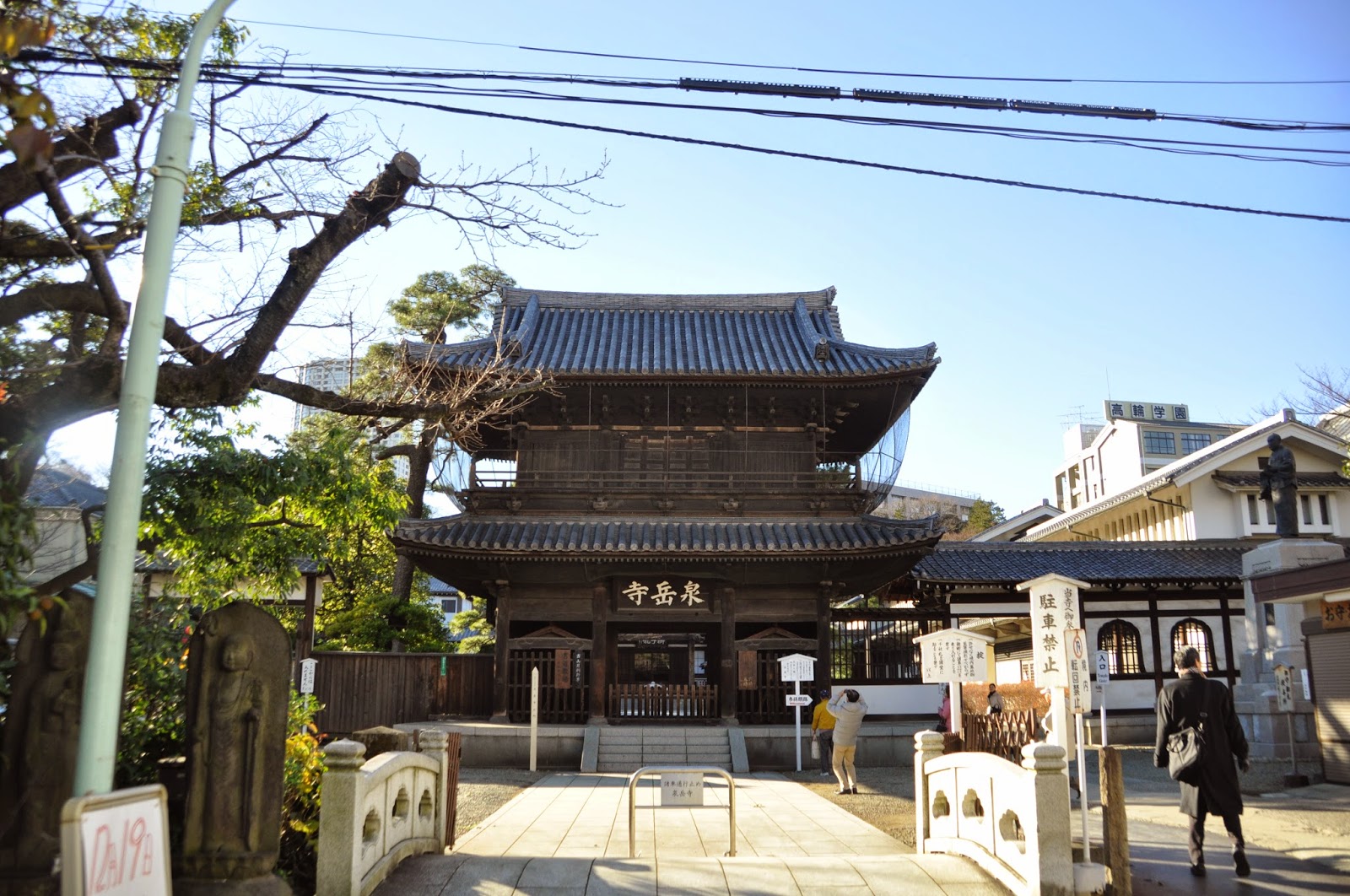
Sengakuji Temple: Remembering the 47 Ronin


Every country has at least one story that strikes a deep chord within the heart and soul of a culture to resonate throughout society. It’s a story that illustrates the basic elements of a society so well that it’s told over and over again, passing from generation to generation. Tokyo is full of temples and shrines. Actually, the entire country of the Rising Sun is littered with thousands of places of worship. Many, if not all, are worth visiting, but as time is always against us, we have to pick and choose. 


Japan has many epic stories of love, tragedy and vengeance in its long history, but one story in particular stands out: the story of the 47 masterless samurai, or onin. It is a story that exemplifies the samurai spirit and the cult of filial love between a retainer and his master. In its essence the story captures the spirit of the Japanese. If you like stories about Medieval Japan, the samurai and their entrenched spirit of honour, I recommend you visit the cemetery of the 47 Loyal Retainers. Their story is known worldwide as that of the 47 ronin who, in the 18th century, avenged the death and honour of their master and then committed seppuku, a ritual suicide which evolves self-disembowelment using the samurai’s short sword. December has always been the month where the 47 Ronin enter the stream of modern Japanese consciousness. The assault by the Ronin on Lord Kira’s estate took place on the “fourteenth day of the twelfth month” in the year of Genroku 15. While this actually corresponds to January 30th of the Western calendar, the Japanese have traditionally recognized it on December 14th.


The History of 47 Ronin

Lord Asano astute in front of gateway  

The 47 ronin were former samurai retainers who avenged their master’s death by killing his enemy then stoically awaiting the sentence of death to be passed on them by the government. Their act of defying the government’s laws and following the Way of the Samurai to be faithful to their lord unto death won the 47 ronin everlasting fame and admiration of the Japanese people. Their story began in 1701 at a time when Japan was isolated from the rest of the world by government edicts. Control of the country was in the hands of the shogun who ruled in Edo, now called Tokyo. The shogun of that time was known for his bizarre laws protecting dogs and other animals to the detriment to his own people. Every year on December 14, people gather at their graves at Sengakuji Temple in Tokyo to commemorate the deeds of the 47 ronin. The Ronin appear in commercials, special events and observances are held at Sengakuji Temple (where the Ronin’s graves are located), and the airwaves tend to screen a goodly number of the dozens of TV shows and movies that have depicted the event over the decades.

The main entrance to the tomb of ronin 47

Under Shogun Tokugawa Tsunayoshi, dogs were held in higher esteem than people. It was also a time of lavish extravagance and decadent corruption. The samurai were losing their status and many began acting less and less like samurai by drinking, gambling and attending kabuki plays. One country lord, Lord Asano of Ako, a man of simple but honest beliefs was called upon by the shogun to come to Edo and meet with envoys from the emperor. This would require him to learn the complex intricacies of court ceremony. Lord Asano was assigned to the master of court ceremonies, Kira Kozukenosuke, to be taught in the ways of imperial ceremony. Kira was accustomed to receiving gifts of a monetary nature from his pupils, like many court officials of the time. When Lord Asano failed to bribe Kira properly, Kira became enraged and insulted him often. Lord Asano loses his temper and along with it his life and his family’s position. Finally, Lord Asano could take it no longer and in a fatal moment of indiscretion, unsheathed his sword and attacked Kira while they were in the shogun’s castle. This action earned Lord Asano a quick death by seppuku — ritual suicide. Lord Asano’s samurai retainers led by Oishi Kuranosuke found themselves ronin and the Asano lands confiscated. There were many who felt the judgment was too harsh as well as unfair particularly because Kira who many felt orchestrated the attack was left unpunished.

The ronin tomb in temple area

Lord Asano forced to commit seppeku for baring a sword in the Shogun’s castle. A core group of Lord Asano’s retainers plotted vengeance against Kira. However, the spies of the shogun and Kira himself were on the lookout and Kira was well guarded against such reprisals. Oishi and the other plotters disguised their true intentions and pretended to become farmers, merchants, gamblers and even drunkards. Oishi, who was watched the closest by the spies, went so far as to lull his enemies into a state of false security that he left his wife, frequented brothels and passed out drunk in the most unsamurai-like manner in the streets of Kyoto. His performance was so good that a passing samurai kicked and spat on him thinking Oishi a disgrace for sinking to such depths while not avenging his master. The spies believed Oishi had truly become a harmless destitute creature and so Kira relaxed his guard. Oishi, however, secretly stole away to Edo and met with 46 other loyal companions to plot their assault on Kira’s mansion. On a snowy evening on December 14, 1702, the 47 ronin attacked Kira’s home and took it completely by surprise. They found Kira cowering in a charcoal shed. Kira was offered the choice to commit seppuku but he refused, so Oishi cut off his head with the same dagger that his lord used to kill himself.

A part of ronin tomb

The 47 ronin then walked to Lord Asano’s grave in Sengakuji Temple and placed Kira’s head upon it. After that, they turned themselves into the shogun except for the youngest ronin who Oishi sent back to Ako to tell of Kira’s death. The shogun was beside himself on what to do with the 46 ronin in his custody. To some degree he much admired them for being true to Way of the Samurai. Their actions set off a controversy of debate. Much of the general public wanted their release. Several lords pleaded for the men to be granted life and be allowed to serve them. On the other side, critics argued that the ronin had willfully disobeyed the shogun’s law and to pardon them would be to invite lawlessness and anarchy. In the end they were allowed to commit honorable seppuku rather than be executed like common criminals. They were interned with their lord at Sengakuji Temple. The surviving ronin was pardoned by the shogun and lived until he was 75 before being buried along side his comrades. Lord Asano’s lands and titles were restored to his family and his brother became the next lord of Ako.

The Temple of Sengakuji

The main hall of Buddhist temple

The first thing you will see when entering Sengaku-ji is a large statue of the ronin’s feudal lord Asano Naganori. Then you will notice that entrance is absolutely free, but the museum is not. When you enter the grave yard, you will be given the option to buy incense to put on the graves. When I went, it was reasonably crowded but not too much so. I personally did not burn incense or pray at the graves. I’m not Japanese and would feel silly doing so. As you can see, unless you can read Japanese, you will have trouble telling which grave is which. The smaller grave stones are the ronins and the larger one to the main burial area is for their leader.


Countless plays, novels, and later movies and documentaries have been done on this story that so caught the people’s attention. Even today, they are not forgotten and the 47 ronin are still held in high esteem. Their story strikes so close to the heart of Japanese thought and belief that some Japanese scholars have said: “… to know the story of the 47 ronin is to know Japan.” Hopefully you enjoyed a look at the burial site of the 47 ronin. This is a rather famous spot to visit in Tokyo but my next articles should be more off the beaten path. If you like anime pilgrimages and Japanese castles, then you will be in for a treat….if all goes well.

Note: To get to Sengaku-ji temple, take the Asakasa Line at Shimbashi station of the Yamanote line. Sengaku-ji station is not far. Exit A2 and take a left when you arrive at Sengaku-ji station.

Wednesday, October 8, 2014

Oze National Park: The autumn walks...


Before heading to Oze National Park, numerous people told me to mentally prepare myself to share it with the hordes. It was a holiday, it was hiking season, it was a super popular destination, etc, etc. Funny that last part as I'd never even heard about it until a month ago when my friend's suggested hiking there as a counterpart to visiting her family in Fukushima. Oze? What's that? Turns out Oze is Japan's largest highland marsh, sprawling over the three prefectures of Fukushima, Gunma and Niigata.

I decided however that I would not prepare myself for sharing Oze with a large percentage of Japan's population, but instead would devote my mental energy to keeping everyone else away. I had a few things going for me. First, Oze is pretty big; about 25,000 hectares, second it's pretty inaccessible; getting there involves some combination of trains, cars and buses, third, it was not any kind of flower season (a main draw apparently), and fourth, on the day we were scheduled to go, it was grey and rainy. That's a bonus for me.


Even with everybody telling me otherwise, the marsh grass starting to turn a beautiful reddish gold (the grass really was that colour, not photo shopped at all), and the fact that it was during a 5 day holiday, I just had a feeling that it wouldn't be crowded. Nobody believed me of course, but as you can see from the pictures, my intuition ended up being correct in the end. Now I just need to get a feeling about the numbers in the next lottery. Fall comes early at this elevation! No doubt the crowds will start picking up in the coming weeks.


Every trail in Oze is made of very nicely designed wooden boards and bridges, an admittedly impressive, and no doubt expensive feat of engineering considering there is no road access anywhere near the park, and that these trails go pretty much everywhere for miles and miles. Stepping off the trail is a no-no as the delicate balance of nature needs to be protected! I'm not sure that these well constructed wooden walkways full of rusty nails are really doing the ecosystem a whole lot of good, but I suppose it's the thought that counts, and it does help keep people away from certain areas, and provide access through the marsh in the spring when it's muddy. Not only that, it made the walk incredibly easy and comfortable, which is definitely not a bad thing.


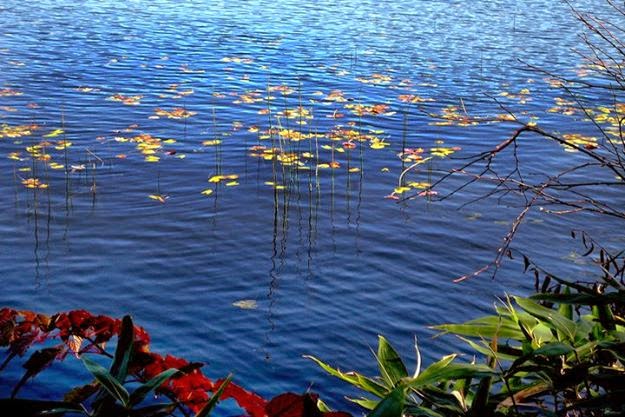

To properly appreciate Oze, you really need a couple of days, maybe even three. The park is huge and there's no way you're going to be satisfied with a day trip from Tokyo. From Fukushima, I stayed overnight at a Japanese inn, then headed out to the park the next morning at dawn. Even with an early morning start right next to the entrance, I only got to see a frustrating 20% of the park. There was a much more massive marsh area (compared to the one you can see in these pictures) a few hours hike away (see the map at the end of this post, the massive marsh being on the left) that I didn't have time to go to.


Oze has a whole plethora of flower viewing times throughout the spring and summer. You can find flower viewing schedules telling you the exact weeks for this and that flower to be blooming. Peak times are in the spring, which is when the Japanese skunk cabbage (lovely image there) blooms, and the end of summer for the yellow alpine lily. If you're a flower fan and like your national parks to be as crowded as Disneyland, you won't be disappointed. Flowers are not really my thing though, and I'm happy to leave them to others. Except in cases like the picture below. What the heck is this thing? It wasn't listed in any of Oze's flower guides. Anybody know? Looks good enough to eat though.


One trail wound around this fairly large lake, which was the trail we ended up taking. The lake is completely inaccesible though, well at least you're not supposed to touch it. No swimming, no boating, no fishing, etc. The fish and ducks in Japan never had it so good. One wonders why they don't all come here. In the distance, the peak hidden in clouds, is Hiuchigatake, the highest mountain in northwestern Japan at 2356 meters. When I arrived at the Fukushima entrance lodge (only accessible by shuttle bus or taxi) it was drizzling slightly, but as soon as we started hiking the rain stopped, and held off for the rest of the day. I also had intuition about the weather too. Am I good or what? Sure it was still grey and cloudy, but the air was fresh and cool, perfect hiking weather in truth.


When I arrived at the Fukushima entrance lodge (only accessible by shuttle bus or taxi) it was drizzling slightly, but as soon as I have started hiking the rain stopped, and held off for the rest of the day. I also had intuition about the weather too. Am I good or what? Sure it was still grey and cloudy, but the air was fresh and cool, perfect hiking weather in truth. You can see the trail we took on the map below, and the much larger marsh on the left side (green area). Actually this is only a small percent of the whole park. It extends quite a ways north, west and south.


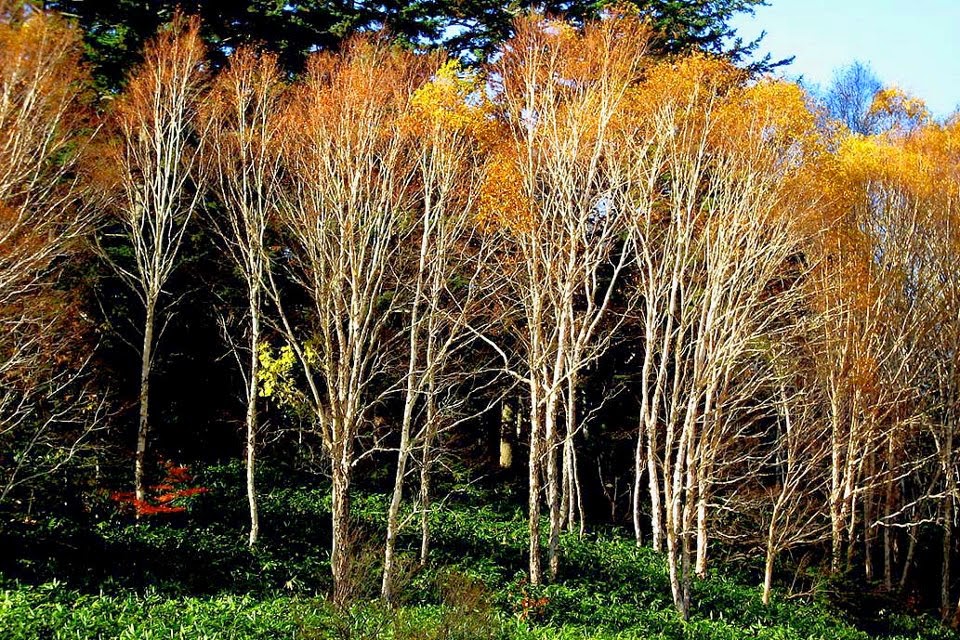

To give an idea of distances and walking times, my route at a fairly leisurely pace took a good 5 hours with a few breaks thrown in. Of all the hikes I've done so far, Oze has definitely been the best in terms of scenery, walkability, and uncrowdedness. I'll definitely be heading back again to check out the parts that I missed the first time. When? Well I'd better not say here, I don't want to give the crowds any ideas...

Friday, September 26, 2014

Kamakura: Back to the Shogunate Period's


It was very hard planning my trip to Kamakura. The more I read about it, the more I realized there was to see and do, but I did not want to feel rushed and miss things by going too fast. So I decided to go to several of the major sites and really enjoying in detail. I have only been in Japan for a few months. Getting there was surprisingly easy. Taking the subway from Asakusabashi to Sengakuji Station and changing the platform to taking Keikyu Line train in same station to Yokohama than taking the Yokosuka line train the whole way to Kamakura just one hour, the latter was just an hour ride with views of Tokyo Bay on one side and hills on the other. Upon arriving at the station, I've found a tourist map in English and headed to the Tsurugaoka Hachiman Shrine.


Though technically a religious place, the Kamakura Shoguns would conduct a lot of their business there, under the watchful eye of the deity. They prayed to him for success in battle, so it was definitely an important place in the tumultuous past. Now it was an impressive, ornate building on the top of a hill, still showing the power and wealth of the ruling class after so many centuries. It was enjoyable to take my time looking at everything, and at a faster pace probably would have missed a lot. For example, I felt saddened to see a stump by the stairs which had been a ginkgo tree. Stopping to see, I'd found out that it was the site of a famous assassination centuries ago, and that the tree itself was so old and venerable that it was worshiped as having a soul of its own. Upon closer inspection, there were new shoots growing out of it; it was not dead despite having been blown down in a severe storm in 2010.


Kamakura (鎌倉市 Kamakura-shi) is a small coastal town located in Kanagawa Prefecture, south of Tokyo. Home to an impressive number of temples, shrines and historical monuments, it makes a good day trip destination if you’re interested in Kamakura’s beautiful architectural heritage. By train, it takes about an hour to get from Tokyo Station to Kamakura Station, or about 30 minutes if you’re leaving from Yokohama Station. The first thing I learnt when I got there was that Kamakura is a surprisingly popular tourist destination. There heaps of people everywhere! It also seemed like a popular school excursion destination. I saw perhaps six or seven large groups of students from different schools wandering the town. But of course, why wouldn’t this place be anything but popular? Lying amid gorgeous wooded hills and dotted with ancient Buddhist temples and Shinto shrines, Kamakura is often called the Kyoto of Eastern Japan.


Kamakura has a great number of historically significant Buddhist temples and Shinto shrines, some of them over a thousand years old. Kotoku-in, a Buddhist temple of the Jōdo-shū sect, is famous for its monumental outdoor bronze Buddha statue. Standing at an impressive 18.35 metres tall, it is the second tallest bronze Buddha statue in Japan. Cast in 1252, the giant Buddha was once housed inside a large temple hall. However, in the 15th century, a tsunami destroyed the temple. The statue managed to survive and has remained outdoors ever since. Another attraction is the main Tsurugaoka Hachimangu shrine. Founded by Minamoto Yoritomo (the first shogun of the Kamakura government), it is said to be the most famous shrine in Kamakura. During the New Year holidays, it is reported that more than a million people visit the shrine every year.


I had a great time walking from place to place, some places were quiet close together which was handy. The next stop was Kencho-Ji Temple. This is the first ranked temple of the five great Zen Temples in Kamakura. The temple was built over five. The Tsurugaoka Hachiman Shrine, Largest Shrine in Kamakura years and completion was in 1253. The Temple founder was Rankei Doryu, a chinese Zen master. The following quote demonstrates the nature of his Zen teaching.


Next stop, Meigetsu-In, by far my favourite thing of the day. It has an amazing garden. There were elderly Japanese men and women sketching in there and beautiful trees and flowers. There is a Moon-shining teahouse, There is a Moon-shining teahouse, what they call a dry garden which expresses the buddhist view of the world. It was founded in 1160 and in 1256 it was chosen as the site for the construction of the Buddhist Temple Saimyoji. It is a place dedicated to Zenkoji worship, which is the main image of Kannon Bodhisattva, the deity of compassion. I stayed here for a long time just walking around and watching the Japanese people sketch. I was a truely beautiful place and I would recommend if you go to Kamakura to visit it.


It is a place dedicated to Zenkoji worship, which is the main image of Kannon Bodhisattva, the deity of compassion. I stayed here for a long time just walking around and watching the Japanese people sketch. I was a truely beautiful place and I would recommend if you go to Kamakura to visit it. By this stage of the day I have spent 4 hours looking at temple and I knew that was it for me on the Temple seen for one day. There were still other temples I wanted to see, so will be going back for that when the weather warms up so I can have a look at the beach. By this stage of the day I have spent 4 hours looking at temple and I knew that was it for me on the Temple seen for one day. There were still other temples I wanted to see, so will be going back for that when the weather warms up so I can have a look at the beach.


There were a lot of people there and my camera was about to go flat so I asked a Japanese man to take a photo for me. After what seemed like an eternity he finally took a photos so I thought but he had just moved around a lot trying to get the perfect shot just to turn the camera off. I didn't have the energy to wait for him to try again. So I found a younger Japanese girl to take a photo, she managed to take the shot but chopped the Buddha's head off. Then my camera completey died. So that's my photo me and the headless Buddha. I thought Japanese people were good at taking photos. I guess not on that day.


After a long day I headed back to the train and got back to my little town of Asabata. I will go again and see the reast of the temples I didnt see and check out the beach there, it is a must I think. Before leaving Kamakura, don’t forget to visit Zeniarai Benten. You will enter through a small tunnel carved into the rockface and there you can wash your money in the shrine. Just why would you wash your money? Because legend says you’ll double it! You’ll find many people washing the five-yen coin as it is considered lucky on its own because “go en” is Japanese for “five yen” and also “fate.” Therefore it’s the most common currency donated at shrines.

Monday, September 15, 2014

Kamikochi: The nestled deep in the Alps


Kamikochi seems worlds away from the urban sprawl most people associate with Japan. The air is fresh, the waters crystal clear, and the mountains majestic. The name can mean “high above earth” or “where the gods descended” and is apt both literally and figuratively. Located a little less than two hours from either Matsumoto or Takayama (both worthy of a visit), makes it a comfortable escape and return to the wild. Due to the increasing popularity of the national park, private vehicles are no longer allowed inside the resort, meaning the only means of vehicular access is limited to either bus or sanctioned taxis. This is more of a blessing than an inconvenience for those basking in the peacefulness of what many refer to as their favorite place in Japan.


In the Japanese Shinto religion mountains are considered sacred and, as such, have been revered and respected long before mountain climbing came to be thought of as “sport”. In fact, Japan still has many religious ceremonies which include climbing to the tops of sacred peaks for spiritual benefit. However, nowadays mountaineering in Japan is hugely popular and Kamikochi is considered hallowed ground to Japan’s serious mountain climbers. Anybody who has had the pleasure of climbing Mount Fuji in mid-summer surely understands just how fond the Japanese are to don a shiny new North Face jacket and head up a mountain with a few hundred of their closest friends. Mountain climbing has even recently made it’s manga debut in the massively popular 岳 (Gaku), which just happens to be set to the backdrop of Kamikochi.


At the bus terminal, there is a tourist information center where visitors can purchase pocket-sized maps of the area for 100 yen. There is also a rest area where you can plan your route while enjoying refreshments from one of the many nearby shops. Those who need a toilet are encouraged to show their appreciation for cleanliness by placing a tip in a box with a note stating the average amount is 100 yen. There are about seven other equally clean toilets scattered throughout the park that deny you this privilege, forcing the use of their facilities for free. Walking towards the azure waters of the Azusa River, it’s easy to see Kappabashi (not to be confused with the popular “Kitchen Town” in Tokyo), the most famous bridge in the area, and a popular landmark where many visitors like to take pictures. The view from there of the nearby mountains towering above is, in a word, stunning. Both sides of the bridge offer a number of accommodation and refreshment options.


This popular destination has seen many changes over the years. Even the kanji used to write Kamikochi have evolved over the years; 神河内、神合地、神降地、and finally 上高地. Tourists used to flock here by the thousands, driving their own cars in to the national park and parking just about anywhere they could, but now all car travel in to Kamikochi is restricted and travellers these days make their way by taxi or bus. This leaves nature free from the burden of hundreds of Toyotas coming through every day and also keeps the number of tourists down, especially overnighters.


A relaxed half-hour walk downstream brings you to the Hotaka and Tashiro bridges, which are joined by a small island. Another twenty minutes or so from there, either by a river or forest path, brings you to Taisho Pond, which was formed when nearby Mount Yake, an active volcano, erupted in 1915. The ever-present smoke plume coming out the top can serve as a reminder to be respectful of nature, especially in its most pristine state. Speaking of which, visitors are expected to leave only footprints, bringing all trash home with them (most opt for a rubbish bin in the nearest major town, but some, like my roommate, actually do maintain an impressive alter to the god of refuse in their house). 


Myojinbashi is the next bridge upstream from Kappabashi, and can be reached in about an hour by either a boardwalk across marshes and streams on the north side of the river, or via a footpath through a campsite with toilets on the south side. Keep your eyes open for macaques. Nearby Myojin Pond (entry ¥300) is a must-see. There are rest areas either side of the bridge with toilets and refreshments available. Another hour or so upstream, on the south side, is a grassy meadow dotted with elm trees. This used to be a pasture, but is now Tokusawa campsite. There are more lodging, toilet and refreshment opportunities here as well. For day-trippers, this would be a good place to turn around and head back to the bus terminal. Serious hikers staying in the area will want to continue on a few hours to the peaks.


Standing on Kamikochi’s famous Kappa Bridge and seeing a range of 3000 metre tall mountains is nothing short of awe inspiring, but mountains aren’t the only thing that Kamikochi has to offer. In the eerily calm of nearby Taisho Lake stands the withered remains of trees that survive from the 1915 volcanic blast that plugged up part of the Azusa River and formed this very pond. Equally exciting is walking through the dense forests on one of Kamikochi’s many footpaths, which will almost guarantee a visit from some of the region’s wildlife, including the popular Japanese macaque. And for anyone who does manage a bit of walking during their visit here, there are few things better than a dip in an onsen (Japanese hot spring) after a long hike!


There is plenty of gorgeous scenery to be enjoyed by all fitness levels, making Kamikochi a fantastic destination for all age groups. The usual outdoor common sense applies (stay on paths, don’t feed wildlings). Dressing in layers with waterproof gear is recommended as the weather can change from a warm sunny day to hail in a couple hours.